Futurebuilt Norway: 59% Carbon Reduction by Early-Stage Design
How can a residential project reduce carbon emissions by up to 59 % while enhancing architectural quality and social spaces?
Nansenlokka near Oslo, demonstrates the answer – a FutureBuilt exemplar that integrates material strategy, energy efficiency, and green urban design from the concept phase.
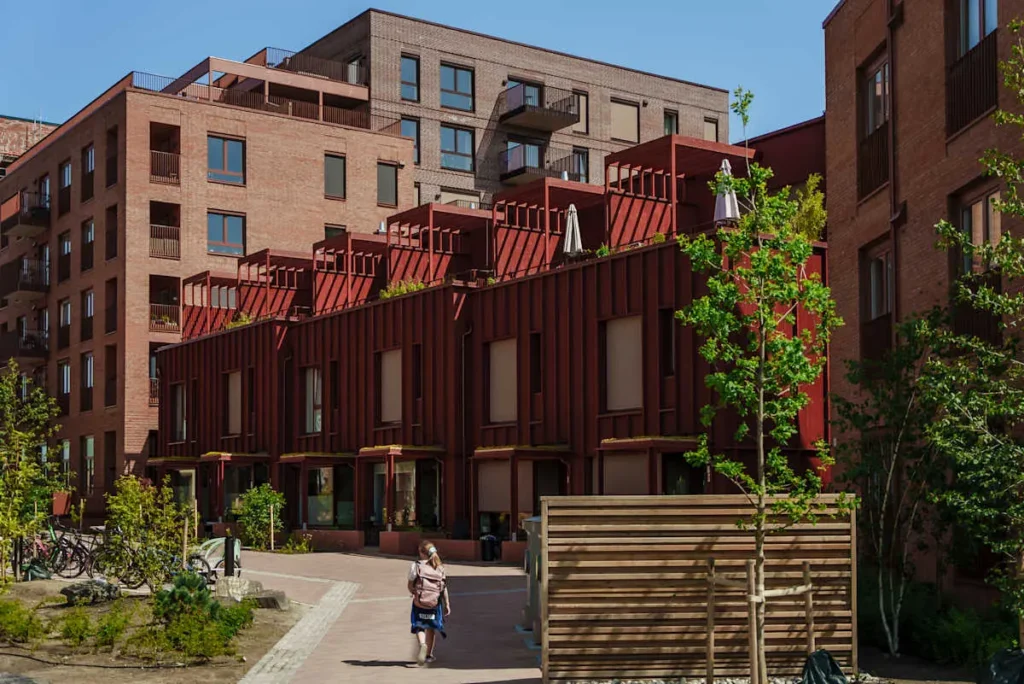
Cover photo: OBOS Nansenløkka row houses and apartment buildings, completion 2026 Text edited by: Vikki Johansen
Early-Stage Material Assessment
Nansenløkka illustrates that carbon reduction starts with early material selection:
- Low-carbon concrete Class A for slabs and foundations
- Steel profiles with approximately 80 % recycled content
- Cross-laminated timber (CLT) in row houses – OBOS’ first CLT project
- Reduced glazing in the building envelope
Concrete and steel account for the largest carbon footprint. Early evaluation allows optimization of quantities, placement, and recyclability before detailed design. This approach achieved 15 % reduction in material-related emissions compared with reference buildings.
Key takeaway for architects: Integrate material strategy in the concept phase alongside building volume, orientation, and preliminary energy modeling.
Building Envelope and Energy Design
The project achieved 76 % reduction in energy-related emissions through:
- High-performance building envelope with low U-values
- Optimized window and glazing ratios
- District heating with high-efficiency heat pumps
- Solar PV installations
- Smart home and energy management systems
Early-stage simulations of the building envelope and energy needs enabled:
- Assessment of material combinations and thicknesses
- Optimization of solar access and daylighting
- Integration of energy and load management across the site
Key takeaway: Architectural volume and materiality must be evaluated together with the energy concept to meet FutureBuilt ZERO targets.
Circular Architecture and Green Spaces
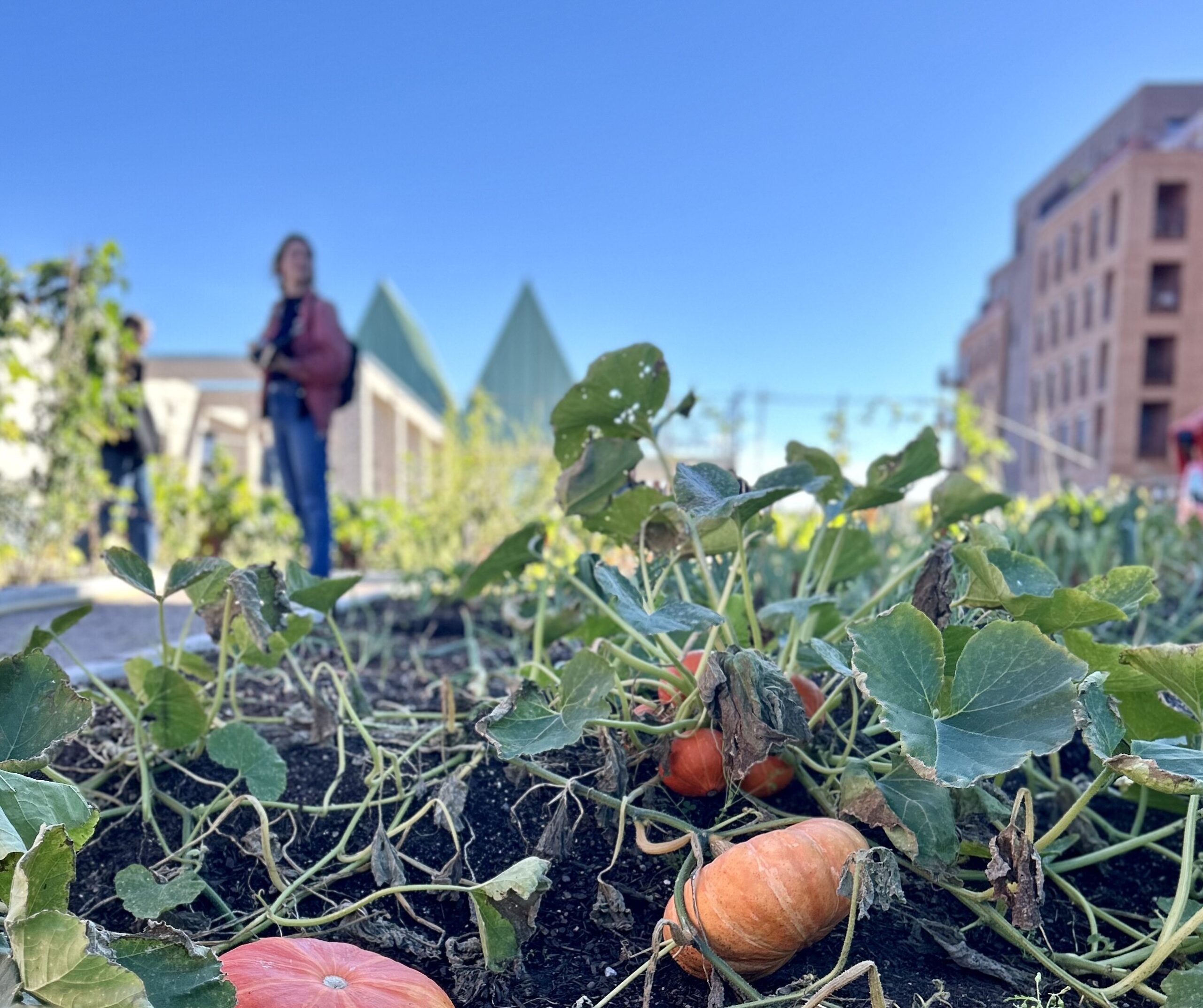
The project’s core concept is a central green urban space with a community house and cultivation areas, surrounded by six residential blocks.
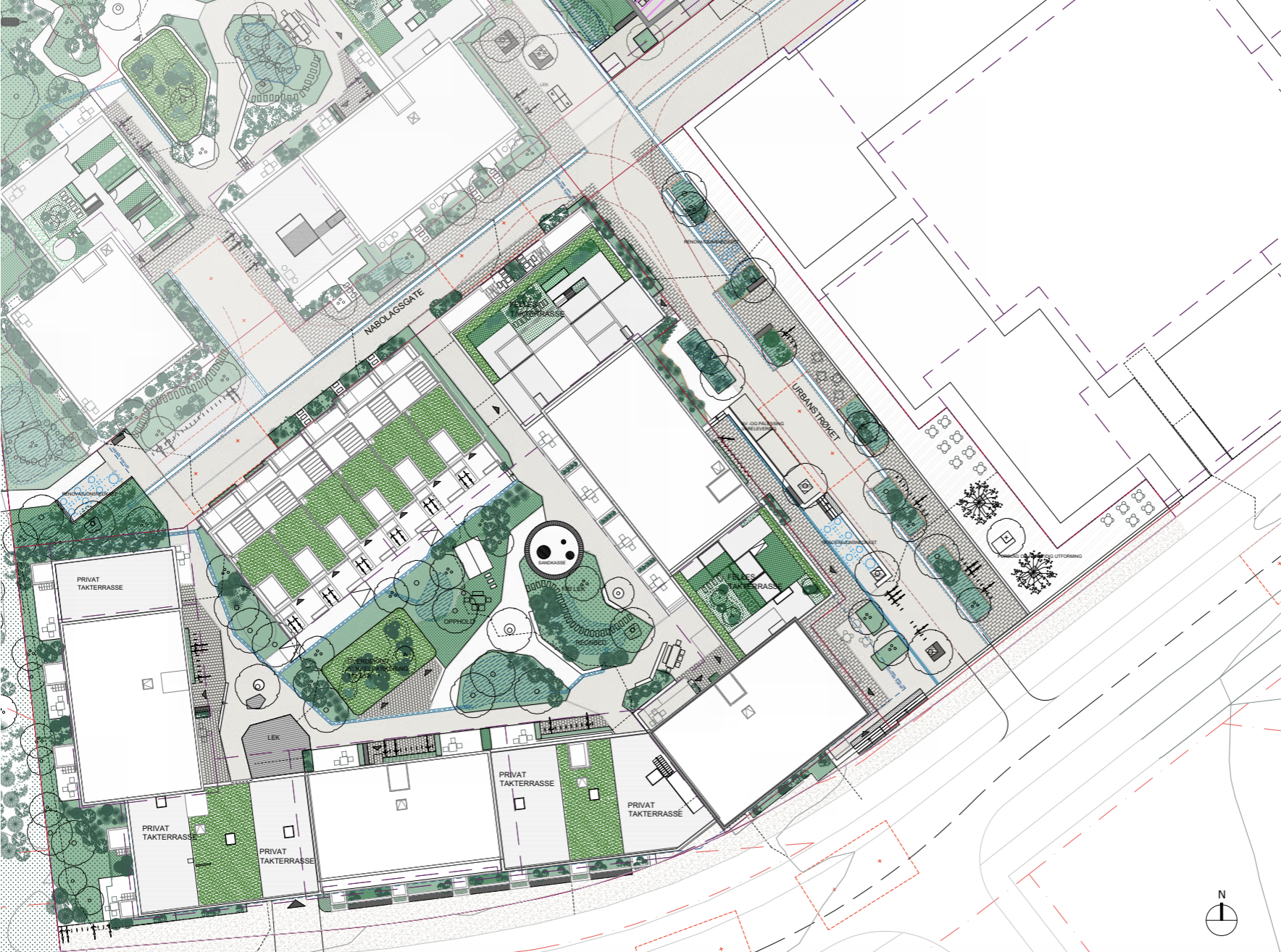
- Higher density along the highway
- More open layouts facing the park
- Hierarchy of shared outdoor spaces and activities, with a central garden and large community house
The shared garden provides a new green space for Fornebu, supporting both urban cultivation and social interaction.
A temporary community house was later reconstructed as a permanent facility following circular principles:
- Reused bricks
- Lime mortar for disassembly
- Cross-laminated timber construction
Social infrastructure and green spaces enhance sustainability:
- Central garden as a community gathering place
- Shared facilities, guest rooms, and workshop
- Bicycle parking and car-sharing
Key takeaway: Early integration of outdoor spaces and social functions enhances both carbon performance and resident quality of life.
Integrated Sustainability as a Design Driver
Nansenløkka demonstrates that 50–60 % carbon reduction is achievable when material strategy, energy systems, and outdoor spaces are developed in coordination from the earliest design stages.
This project serves as a clear reference for architects aiming to deliver:
- FutureBuilt ZERO exemplar projects
- Low-carbon residential developments with documented results
- Integrated solutions for energy, materials, and social spaces
Early-Stage Design Checklist for Architects
- Early start with material strategy: Evaluate concrete, steel, and timber for life-cycle emissions, disassembly, and recyclability.
- Integrate envelope and energy design early: Volume, glazing, and insulation directly affect energy demand and emissions.
- Plan green outdoor areas and shared spaces in parallel with building form and density.
- Document carbon improvements with EPD and LCA iteratively, from generic data to product-specific and construction-phase data.
- Consider additional sustainability measures early, including low-impact chemicals and circular economy principles in materials.
- Use exemplar projects like Nansenlokka as references for implementable, early-stage solutions.
Sources:
- FutureBuilt website Nansenløkka | Futurebuilt