Ground Conditions – Key Risk Factor in Construction
Ground conditions are among the most critical factors in construction projects. Although often perceived as a technical detail, geotechnical investigations are vital for safety, risk management, and cost control. Insufficient knowledge of soil and subsurface conditions can lead to structural failures, landslides, settlement, increased costs, and legal liability.
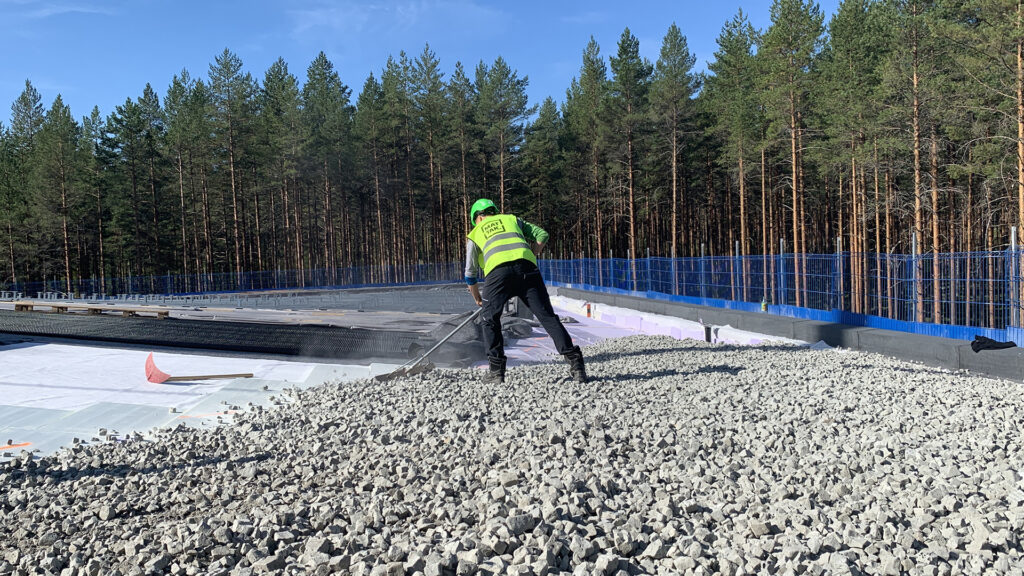
 Vikki Johansen. Edited 10th March 2026. Photo: Glasopor delivered to Breeam Outstanding
Geotechnical surveys typically involve drilling boreholes, sampling soils, and laboratory testing. Results inform analyses of bearing capacity, foundation design, and slope stability. In areas with variable or sensitive soils, few boreholes may not provide enough information, making area-wide assessments necessary.
EU Standards
Eurocode 7 (EN 1997) provides harmonized geotechnical design standards across the EU. It defines procedures for assessing soil bearing capacity, slope stability, and foundation safety.
The Construction Products Regulation (EU 305/2011) ensures that construction materials used in foundations and soil stabilization meet safety requirements.
For major projects, the Environmental Impact Assessment Directive 2014/52/EU requires evaluating potential geotechnical and environmental hazards.
In the EU, contaminated land is governed primarily by the Environmental Liability Directive and the Waste Framework Directive, which require polluters or developers to investigate, manage, and remediate contaminated soil before redevelopment.
Liability and Responsibilities
- Property owners must avoid creating hazards on their land.
- Developers must document safety and implement mitigation measures to protect nearby properties.
- Consulting engineers provide analyses to support safe design. Mistakes may lead to contractual or tort liability.
Even minor projects can pose risks if soil conditions are sensitive or poorly documented. Multidisciplinary teams including civil engineers, geotechnical engineers, geologists, and hydrologists are recommended, especially in areas with slopes, tunnels, or large earthworks.
Risk and Cost Implications
Unstable ground can significantly increase project costs through:
- Additional surveys and laboratory testing
- Soil stabilization or slope reinforcement
- Monitoring and mitigation measures
- Redesigns due to unforeseen soil conditions
Early integration of geotechnical expertise in planning is critical to prevent costly errors, ensure legal compliance, and maintain safety.
International Perspective
While quick clay is mainly a Nordic phenomenon, all countries face challenges with variable or sensitive soils. EU standards provide harmonized approaches for geotechnical risk:
- Eurocode 7: Basis for foundation design, slope stability, and soil assessment
- Construction Products Regulation: Ensures materials meet structural requirements
- EIA Directive 2014/52/EU: Requires assessment of geotechnical and environmental risks for major projects
Integrating EU directives with national legislation ensures both compliance and protection against liability.
In Norway, geotechnical risk is particularly important in areas with sensitive clay soils, including quick clay (“kvikkleire”). The risks include rapid landslides that can propagate over large areas. Norwegian authorities require:
- Comprehensive geotechnical investigations for entire landslide-prone areas
- Documentation of area-wide stability, not just individual plots
- Implementation of mitigation measures before construction
Responsibilities under Norwegian law:
- Private landowners are responsible for stability when making alterations such as extensions, excavation, or filling.
- Developers must document that projects do not compromise surrounding properties.
- Municipalities regulate land use and construction permits to prevent development in areas with unacceptable natural hazards.
- State authorities provide hazard mapping, professional guidance, and oversight.
Norwegian law also imposes an information duty under Avhendingsloven §3-7, requiring sellers to disclose geotechnical risks, including quick clay, to potential buyers
Key Takeaways for Property Owners and Advisors
- Ground conditions affect safety, liability, and cost.
- Early geotechnical investigations reduce risks and unexpected costs.
- Small projects may still require area-wide analysis if soils are variable or sensitive.
- Multidisciplinary teams improve assessment quality and decision-making.
- Compliance with Eurocode 7, CPR, EIA Directive, and local regulations is essential.
- In Norway, special attention is needed for quick clay and landslide-prone areas.
- Documentation and early disclosure protect owners, developers, and consultants from liability.
Sources and Legal References
EU Standards
- Eurocode 7 (EN 1997) – Geotechnical design https://www.eurocode7.org
- Construction Products Regulation (EU 305/2011) – Safety for construction materials https://eur-lex.europa.eu/eli/reg/2011/305/oj
- Environmental Impact Assessment Directive 2014/52/EU https://eur-lex.europa.eu/legal-content/EN/TXT/
- Environmental Liability Directive (2004/35/EC)
EUR-Lex: https://eur-lex.europa.eu/legal-content/EN/TXT/ - Waste Framework Directive (2008/98/EC)
EUR-Lex: https://eur-lex.europa.eu/legal-content/EN/TXT/?uri=CELEX:32008L0098 - European Commission – Soil and land policy overview:
https://environment.ec.europa.eu/topics/soil-and-land_en
Norwegian Regulations and Guidance
- Planning and Building Act §28-1 – Safe building ground https://lovdata.no/dokument/NL/lov/2008-06-27-71/KAPITTEL_28
- TEK17 §7-3 – Safety against landslides https://www.dibk.no/regelverk/byggteknisk-forskrift-tek17/7/7-3/
- Duty to inform buyers https://lovdata.no/dokument/NL/lov/1992-07-03-93/KAPITTEL_3